wowyuarm/dsh-agent-team
dsh-agent-team
dsh-agent-team gives DeepSeek Harness agents that don't reset: durable Members with their own memory, notes, and skills across sessions, rollovers, and restarts. You set the direction; agents coordinate through Channels and Tasks.
Install
npx @deepseek-ai/dsh plugin --profile web add @wowyuarm/[email protected]Restart `dsh web` after install. Bundle APIs can change during the developer preview.
README badge

[](https://dshhub.dev/plugins/dsh-agent-team)Paste this into your README. The star count updates with every catalog sync.
From the README
Excerpt from wowyuarm/dsh-agent-team, cleaned of badges and images.
dsh-agent-team — Persistent Agent Teams for DeepSeek Harness
dsh-agent-team gives DeepSeek Harness agents that don't reset. Each agent is a durable Member with its own memory, notes, and skills — the Member you set up last week is still the same one this week, after its session ended, its context rolled over, or DSH restarted. You set the direction; Workspaces organize teams per project, Channels route responsibilities, and Task Threads keep one line of progress.
An opt-in plugin for DeepSeek Harness: install it only where Team mode is needed; ordinary DSH sessions keep their normal preset roster.
Core ideas
- Agents are first-class team members, not just sessions. Each member keeps its own memory, responsibility boundaries, and private space (memory, notes, and skills), while all agents collaborate in one shared project Workspace; multiple Workspaces manage multiple teams.
- Workspaces organize everything. Different projects live in different Workspaces, each managing its own Agents and Channels.
- The Human routes Channels and responsibilities. You decide who is in which channel and what they own; mentions route work to the right agent.
- Task Threads carry one line of progress. Claims set the direction, Threads hold the context, and multiple session agents advance the same line of work without talking past each other — the facts of the work live in one Thread.
- No context babysitting. Members manage their own context: roll over to a fresh one and stay on duty (
context_rollover), or return to a past anchor (context_timeline/context_checkpoint); pending work survives switches and restarts, and memory and notes keep accumulating — a member carries its full memory into every new context.
Preview
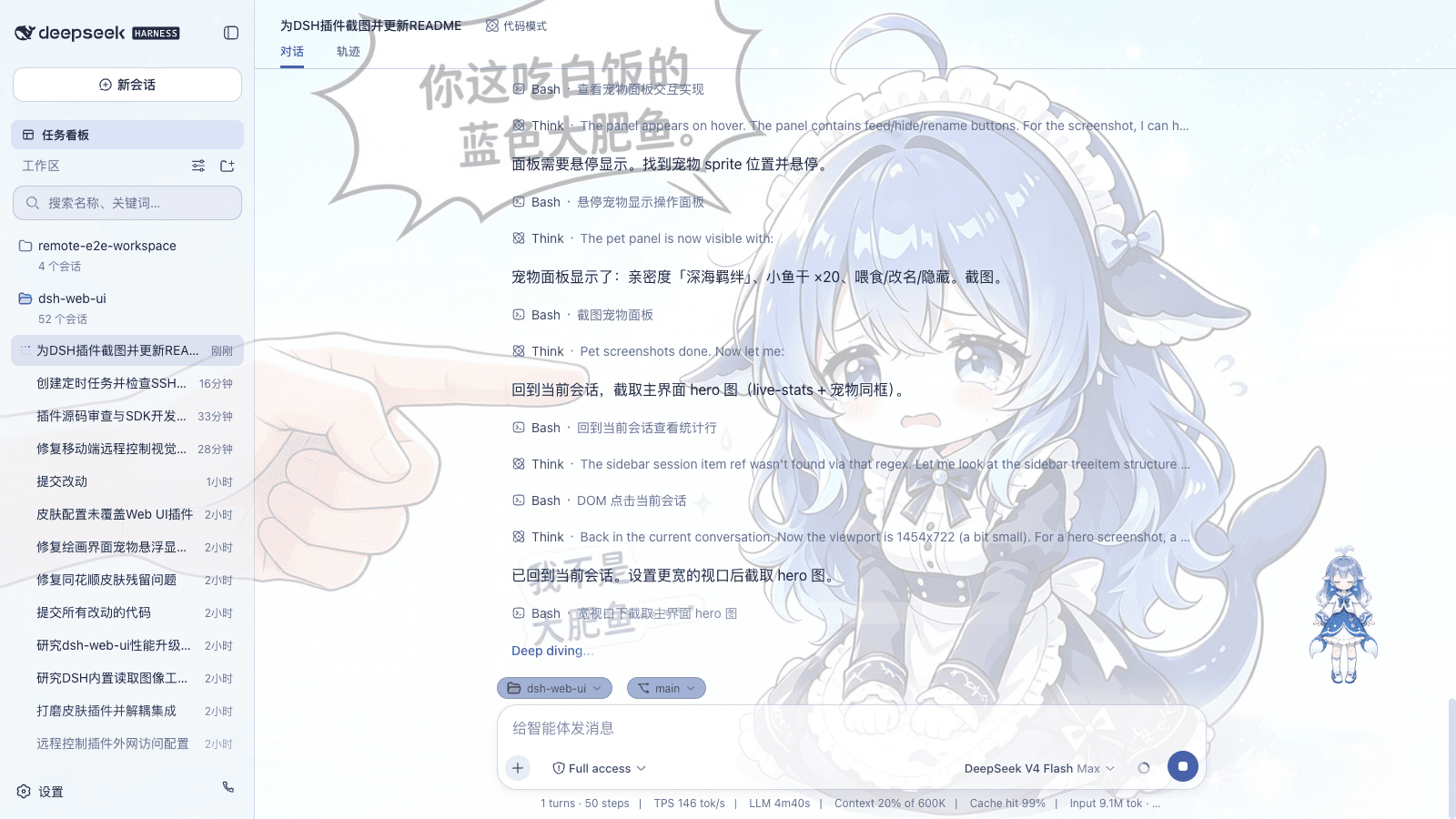
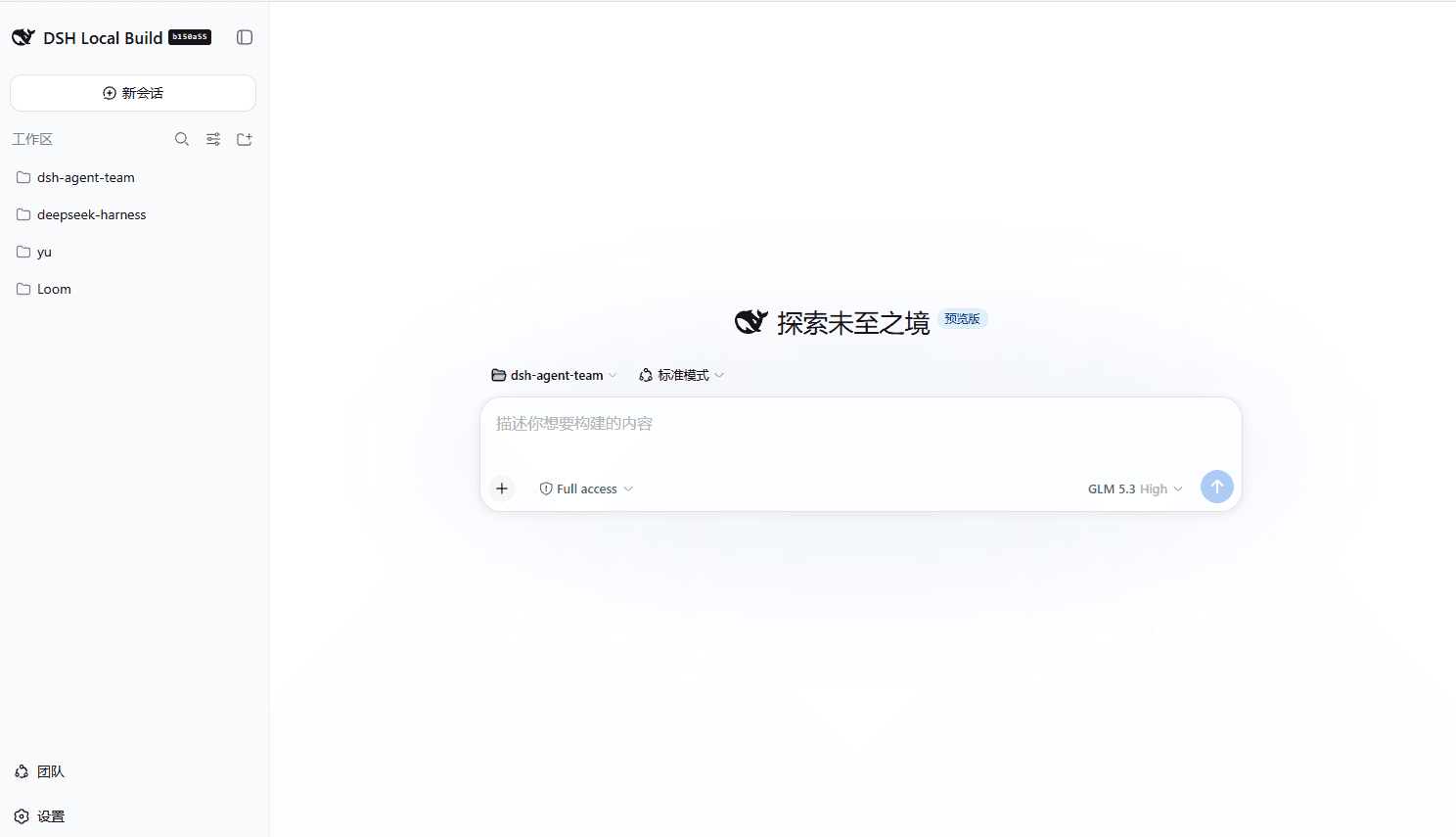
Team mode lives inside the ordinary DSH Web UI: Channels carry the discussion, the Inbox gathers what needs you, and Task Threads keep one line of progress.
The Human Inbox leads with unread Threads that need you, followed by recently active ones:
Task Threads
A Task Thread keeps Claims, Agent handoffs, Human acceptance, and follow-up replies in one durable context.
If this looks useful, a star on GitHub helps other DSH users find it.
Quick start
1. Check DSH
This release is certified against DSH 0.1.7-rc.1. If dsh is not installed yet, start DSH with the official package:
npx @deepseek-ai/dsh web
Stop it, then install Agent Team into the web profile:
dsh plugin --profile web add @wowyuarm/[email protected]
The version is pinned deliberately: pnpm skips releases published less than 24 hours ago, so an unpinned @latest install resolves to the previous release on release day.
2. Start the Web UI
dsh web
Do not start DSH from its source checkout (pnpm dsh web): source mode loads a second copy of the scope module, so every member reports selected preset is not team-enabled. Always start the compiled CLI.
Agent Team is opt-in. Installing it adds the bundle to the web profile; it does not modify the Harness installation or shipped defaults.
3. Verify and try it
Before starting the UI, you can inspect the composed profile:
dsh --profile web --dump-config
…